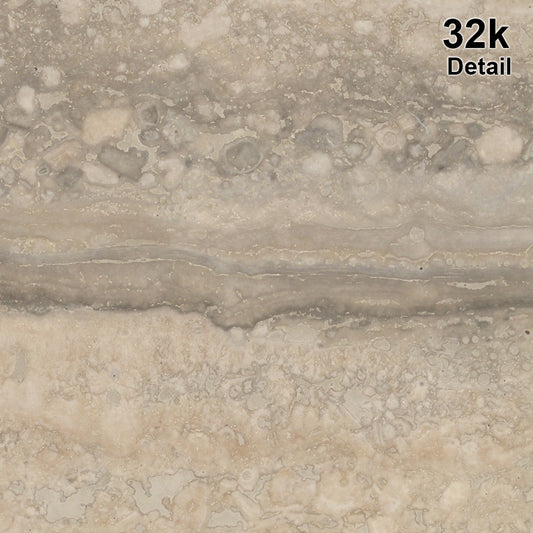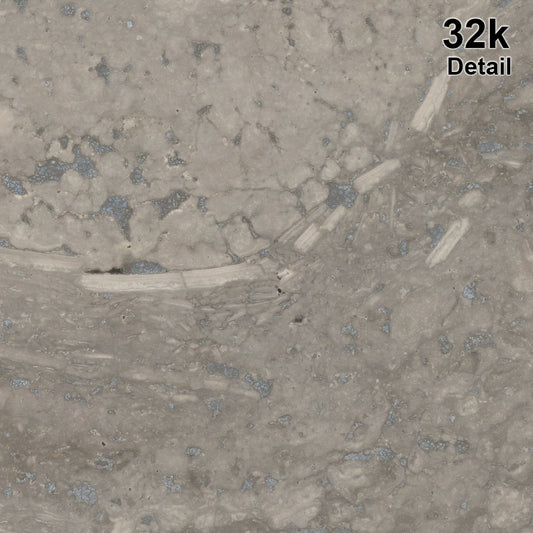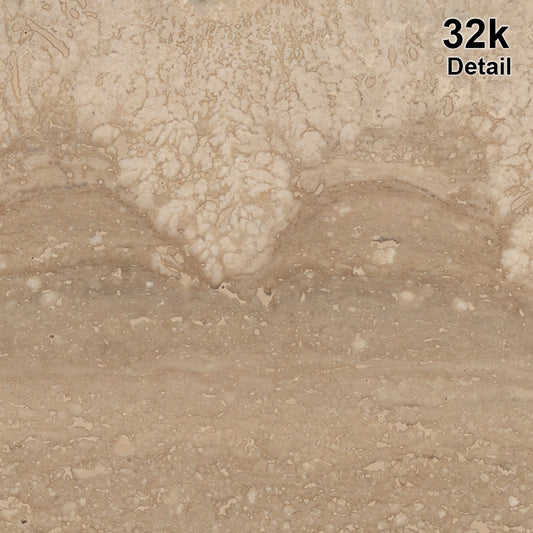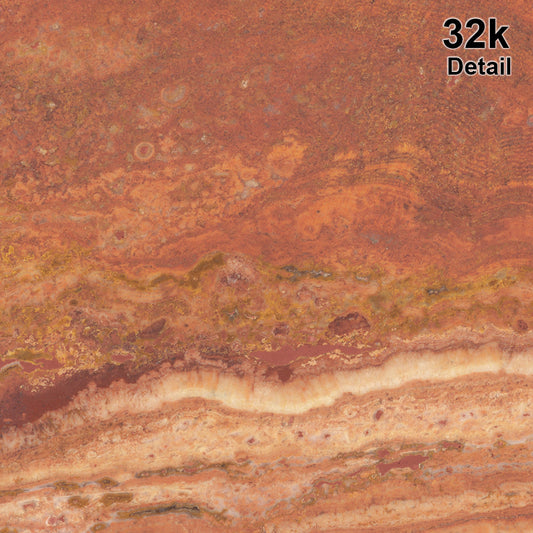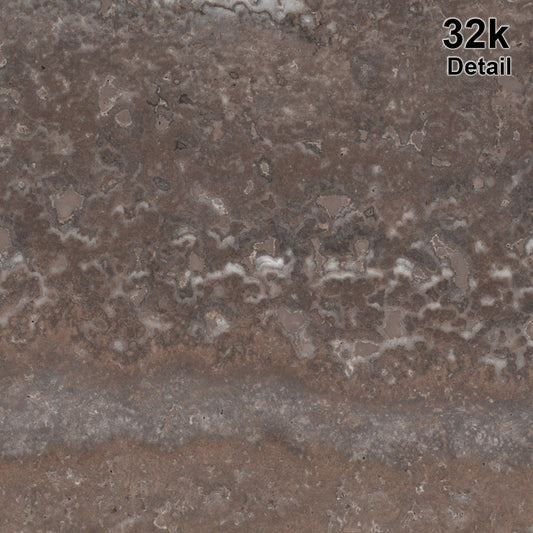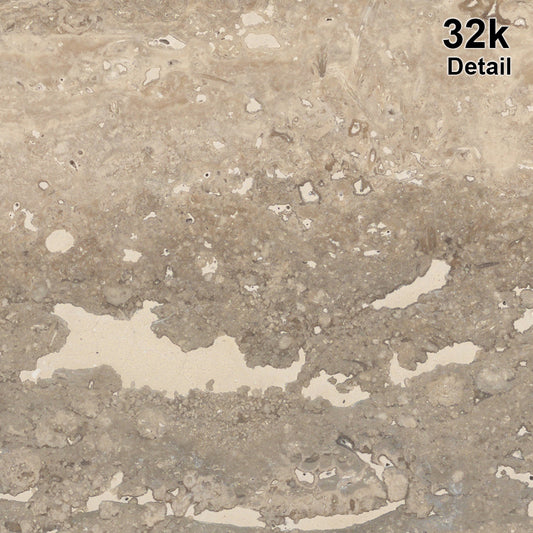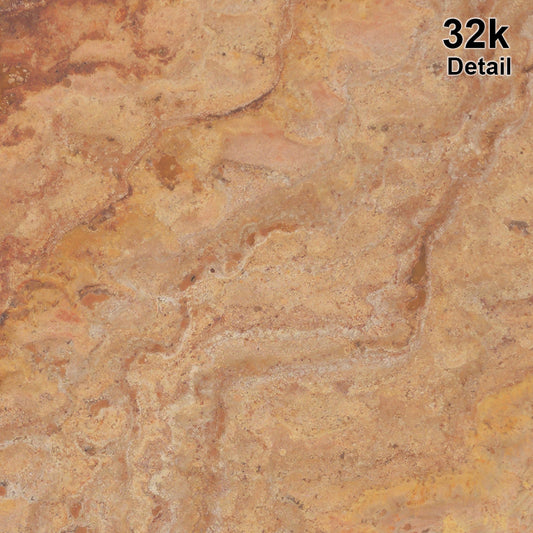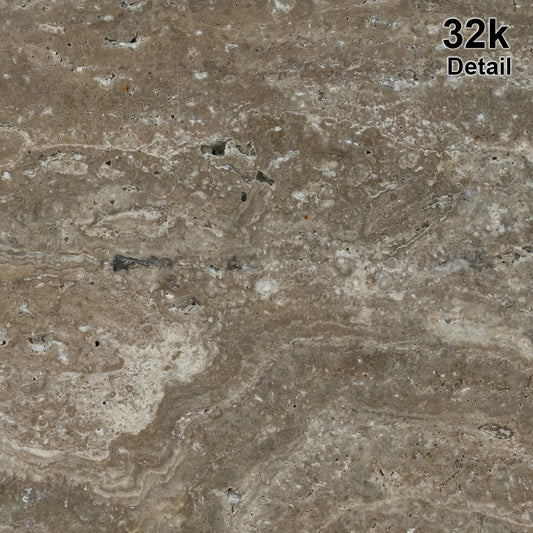
Travertine textures in 8K, 16K and 32K for 3D rendering and archviz
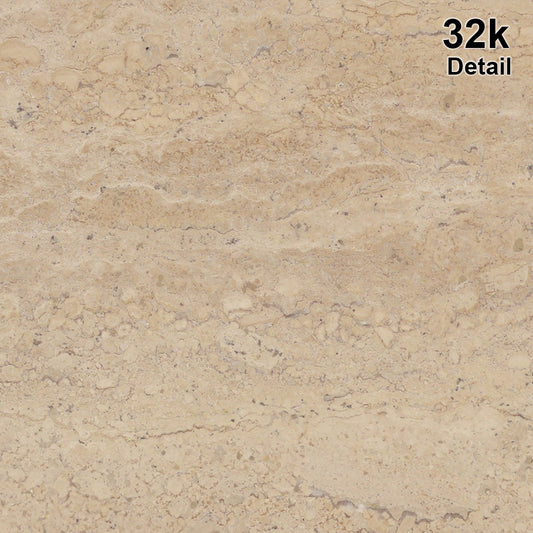
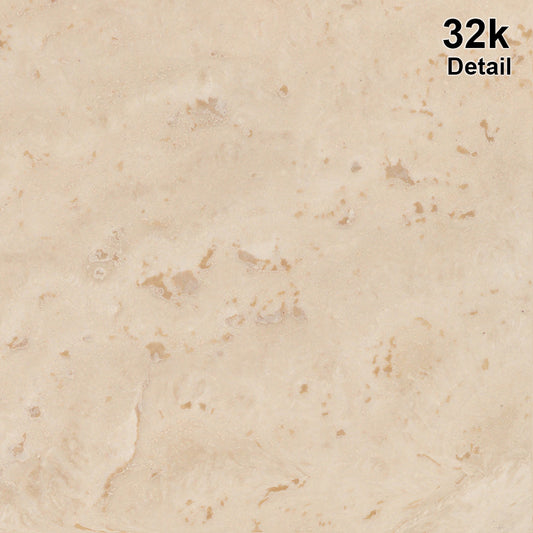
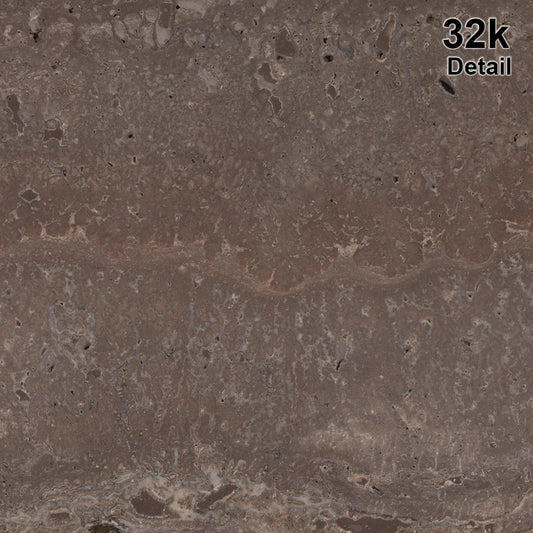
Thirdmap's travertine collection is a library of 12 photo-scanned travertine textures for 3D and archviz, each captured from one real stone slab and delivered in resolutions up to 32K. Every one is a digital surface of real stone, not a physical tile, a plaster effect or a stock photo, and never AI-generated or procedural.
Each texture covers roughly 2800 to 3200 mm of real stone on its long side, so the banding, tone and cut in your render belong to the stone itself.
-
Classic Op2Regular price From $7.00 USDRegular priceUnit price / per
Sale price From $7.00 USD -
Silver Ocean Op2Regular price From $7.00 USDRegular priceUnit price / per
Sale price From $7.00 USD -
Romano ClassicoRegular price From $7.00 USDRegular priceUnit price / per
Sale price From $7.00 USD -
Titanium Op2Regular price From $7.00 USDRegular priceUnit price / per
Sale price From $7.00 USD -
Roman StriatoRegular price From $7.00 USDRegular priceUnit price / per
Sale price From $7.00 USD -
Silver DarkRegular price From $7.00 USDRegular priceUnit price / per
Sale price From $7.00 USD -
Romantic Roma Vain Cut FilledRegular price From $7.00 USDRegular priceUnit price / per
Sale price From $7.00 USD
Travertine texture explained: warm, banded natural stone
Travertine is a limestone that forms when mineral-rich spring water deposits its layers one on top of another. Those layers are why a travertine texture reads as fine, parallel banding in warm creams, tans and browns, and why getting the banding right matters more than anything else in a render. Every Thirdmap travertine is scanned from a finished slab with a smooth surface and no open holes or relief, so the texture carries the stone's own banding and colour across the whole surface. For a wider view of the range, see the natural stone textures library.
Vein-cut and cross-cut travertine: Striato and Classico
The way a slab is cut changes its pattern, and it is one of the first choices an archviz artist makes. Vein-cut travertine shows its layers as straight, linear stripes, while cross-cut travertine shows a softer, cloudier pattern. Like every texture here, it is scanned whole, so the pattern is never stretched or repeated to fill the surface.
Fine banding that stays sharp at 8K, 16K and 32K
Every travertine texture comes in 8K, 16K and 32K, a high resolution travertine texture well above 4K, and you choose the size per texture. Higher resolution keeps fine banding crisp when the camera pushes in on a floor edge or a wall detail. Use 8K for medium shots, 16K for close-up detail and 32K for extreme close-ups where the surface fills the frame: 8K is lighter, not more detailed.
Smooth polished travertine as 8-bit JPG for any PBR engine
Thirdmap's travertine textures are 8-bit JPG colour maps, optimised for PBR workflows and photorealistic results in any render engine, such as Corona and Unreal. The colour map drops straight into a PBR material, and you set the roughness for the finish you want. Because the scanned slabs have a smooth surface with no relief of their own, normal maps are not included, and the detail lives in the high-resolution colour itself. Custom 16-bit or 24-bit files can be requested for an additional charge.
Travertine textures FAQ
What is travertine texture, and what gives it its banding?
A travertine texture is the digital surface of travertine, a limestone that forms from mineral-rich spring water. As it forms, layers settle one on top of another, and those layers show up as fine, parallel banding in warm creams, tans and browns. Thirdmap captures the pattern by photo-scanning real slabs, so the banding in your render is the stone's own and not a synthetic approximation.
What is the difference between vein-cut and cross-cut travertine?
It comes down to the cut. Vein-cut travertine shows its layers as straight, linear stripes, while cross-cut travertine shows a softer, cloudier pattern. In this collection, Roman Striato is a vein-cut stone, so it is the place to start when you want a directional, linear surface. Each texture is a scan of one real slab, so the pattern you see is the pattern you render.
What file format and resolutions do the travertine textures come in?
Every travertine texture is a standard 8-bit JPG and is available in 8K, 16K and 32K, which you choose per texture. Normal maps are not included, because the scanned slabs have a smooth surface with no relief of their own. If you need a different bit depth, 16-bit or 24-bit versions can be provided on request for an additional charge.
Which colours does travertine come in?
The collection runs from warm cream and beige travertine to deeper browns, with darker stones such as Silver and Titanium and a red-orange accent in Rosso. Use the Main Colour filter on the collection page to narrow the 12 textures to cream, beige, brown, orange or red, and compare candidates for a floor, a wall or a feature surface without leaving the page.
Are the travertine textures seamless?
No. Each travertine texture is a photo scan of one real slab, so it is not seamless or tileable. That is what makes each texture one of a kind. A scan covers roughly 2800 to 3200 mm of real stone on its long side, which covers a large area of a render in a single, unrepeated image.